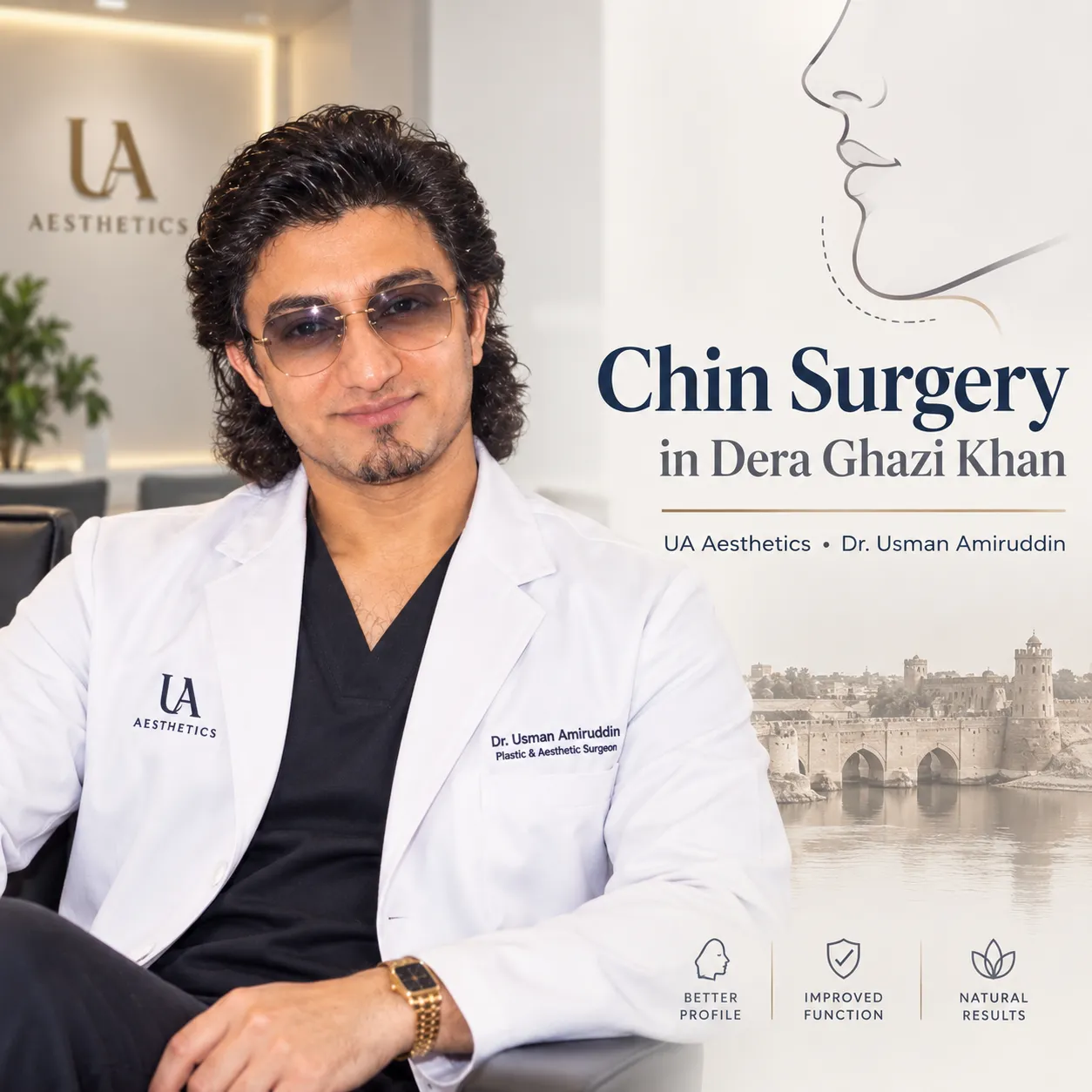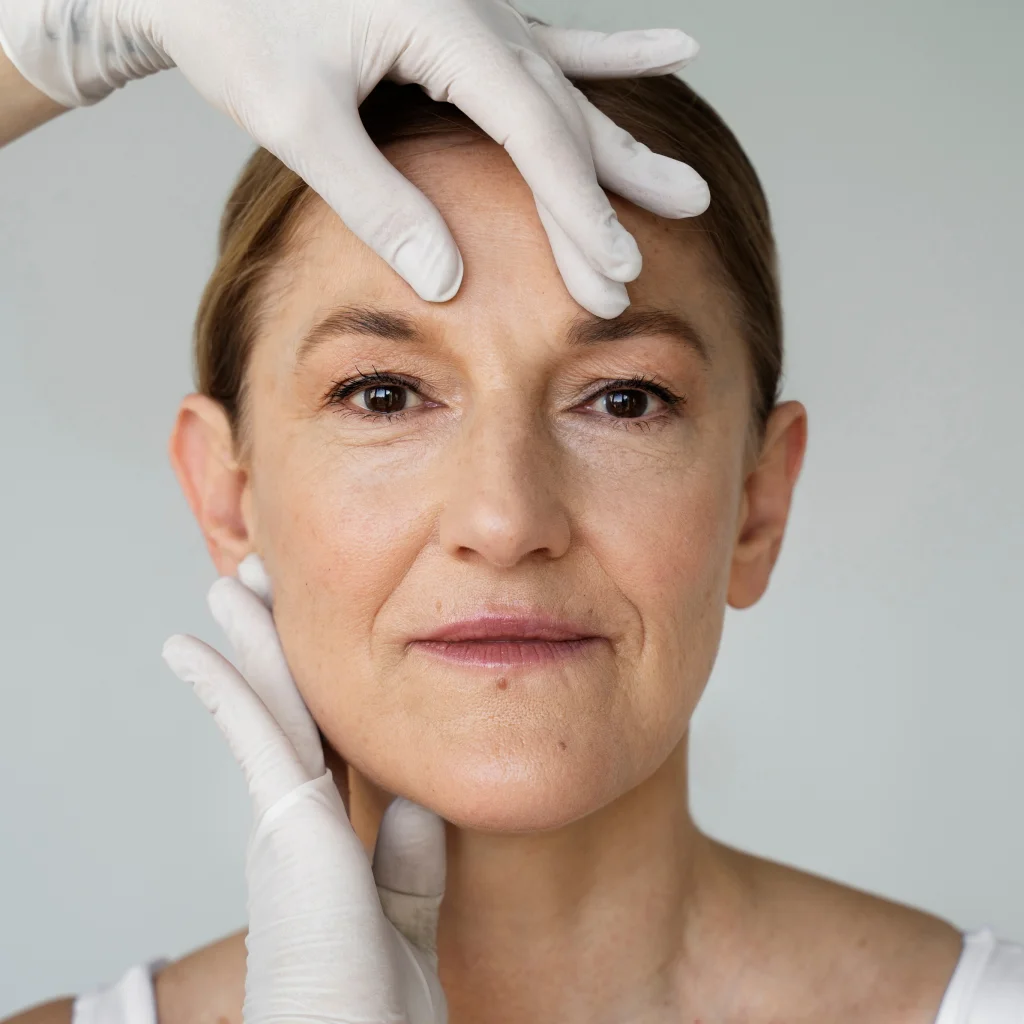
If your chin looks small, recessed, or out of proportion with your nose and other facial features, chin augmentation in Dera Ghazi Khan may help improve facial balance and chin projection. Chin augmentation can be performed using a chin implant or, in selected patients, by repositioning the patient's own chin bone through a procedure called …


If your chin looks small, recessed, or out of proportion with your nose and other facial features, chin augmentation in Dera Ghazi Khan may help improve facial balance and chin projection. Chin augmentation can be performed using a chin implant or, in selected patients, by repositioning the patient’s own chin bone through a procedure called sliding genioplasty.
At UA Aesthetics, chin augmentation is approached as a facial-balance procedure rather than simply making the chin larger. The appropriate option depends on your facial proportions, chin projection, jaw relationship, goals, and clinical assessment.
Key Takeaways
- Chin augmentation can increase chin projection and improve lower-face definition.
- A chin implant is one surgical option for a small or recessed chin.
- Sliding genioplasty uses the patient’s own chin bone and may be considered when bone repositioning is more appropriate.
- Chin augmentation can sometimes be combined with procedures such as rhinoplasty or other facial contouring procedures.
- Swelling and bruising are common during early recovery, and final appearance takes time to settle.
- Surgery has risks, including infection, bleeding, implant shifting, changes in sensation, scarring, and the possibility of revision.
- A personal consultation is necessary to determine whether chin augmentation is appropriate.

What Is Chin Augmentation?
Chin augmentation is a surgical procedure used to increase the size or projection of the chin and improve facial proportions.
It is commonly performed with a chin implant, although some patients may be better suited to a sliding genioplasty, in which the chin bone itself is repositioned.
A recessed chin can affect how the lower face appears from the side. Increasing chin projection may create a more balanced relationship between the chin, jawline, lips, and nose.
This does not mean that every small chin requires surgery. The goal should be an appropriate facial balance based on the individual’s anatomy rather than simply creating a larger chin.
Why Do People Consider Chin Augmentation in Dera Ghazi Khan?
Patients may consider chin augmentation because they feel their chin is:
- Small compared with the rest of the face
- Recessed or positioned too far backward
- Less defined from the side
- Out of proportion with the nose
- Less prominent than they would prefer
- Contributing to an unbalanced lower facial profile
The American Society of Plastic Surgeons notes that chin surgery can be used to improve facial proportions and harmony between the chin, jaw, cheeks, and forehead.
For patients considering treatment locally, UA Aesthetics in Dera Ghazi Khan provides facial aesthetic and plastic surgery consultations under the direction of Dr. Usman Amiruddin. The clinic’s service information also lists chin implants among its facial surgical procedures.
Is a Chin Implant the Same as Chin Augmentation?
Not exactly.
Chin augmentation describes the overall goal of increasing chin projection or definition. A chin implant is one surgical technique used to achieve that goal.
A chin implant is generally a shaped, biocompatible implant placed over the chin bone to increase projection and definition. Implant shape and size are selected according to the patient’s anatomy and treatment goals.
Another surgical option is sliding genioplasty, where the surgeon cuts and repositions part of the patient’s own chin bone rather than inserting an implant.
The best option cannot be selected from photographs alone. A proper assessment is needed.
What Is a Chin Implant?
A chin implant is a surgical implant designed to increase chin projection.
During chin implant surgery, the implant is positioned over the chin bone through an incision that may be made inside the mouth or beneath the chin, depending on the surgical approach.
The implant is selected according to the patient’s facial structure rather than using one standard size for everyone.
The aim is not simply to make the chin prominent. The surgeon must consider the relationship between:
- Chin projection
- Lower lip
- Jawline
- Nose
- Facial width
- Overall facial profile
This is why individualized planning is important in facial implant surgery.
How Does Chin Augmentation Improve Facial Balance?
A chin that sits too far back can make other facial features appear more prominent from the side.
For example, a recessed chin may make the nose appear relatively larger or the jawline appear less defined. Increasing chin projection can sometimes improve the visual relationship between these structures.
Cleveland Clinic notes that chin augmentation can improve definition and contour of the lower face, profile, and jawline.
However, facial balance is highly individual. A good surgical plan should avoid over-projection and should aim for proportions that look appropriate for the patient’s face.
For patients interested in broader lower-face contouring, UA Aesthetics also provides information about jawline refinement, which may be relevant when assessing the relationship between the chin and jawline.
Who May Be a Candidate for Chin Augmentation?
A person considering chin augmentation may be evaluated for the procedure if they:
- Have a small or recessed chin.
- Are physically healthy enough for surgery.
- Have completed facial skeletal growth.
- Have realistic expectations.
- Are concerned about their chin projection or facial proportions.
- Do not have an untreated condition that makes surgery inappropriate.
Cleveland Clinic identifies skeletal maturity, good overall health, realistic expectations, and appropriate jaw and dental relationships as important considerations for genioplasty candidates.
Smoking can also affect surgical healing, so smoking status should be discussed honestly during consultation.
What Happens During a Chin Augmentation Consultation?
A consultation is one of the most important parts of chin augmentation planning.
The surgeon may assess:
- Your front facial appearance
- Side profile
- Chin projection
- Jawline
- Facial symmetry
- Dental or jaw relationships
- Skin and soft-tissue characteristics
- Previous facial procedures
- Medical history
- Your expectations and aesthetic goals
Photographs may also be used for treatment planning and comparison.
If you are considering chin augmentation in Dera Ghazi Khan, your consultation should focus on whether augmentation is actually appropriate and which technique best matches your anatomy.
What Are the Main Chin Augmentation Options?
1. Chin Implant
A chin implant increases projection by adding volume over the chin bone.
It may be suitable for patients whose primary concern is a small or recessed chin and who do not require repositioning of the underlying bone.
2. Sliding Genioplasty
Sliding genioplasty uses the patient’s own chin bone.
The surgeon cuts a section of the chin bone and moves it forward, backward, or in another direction depending on the treatment plan. The repositioned bone is then stabilized.
This can be useful when the required correction involves the position of the chin itself rather than simply adding an implant.
3. Other Facial Procedures
In selected patients, chin augmentation may be considered alongside other facial procedures.
For example, chin surgery may be combined with rhinoplasty or other facial contouring procedures when this produces a more balanced overall result.
That does not mean combined surgery is automatically better. The decision should be individualized according to the patient’s anatomy, goals, safety, and overall treatment plan.
How Is Chin Implant Surgery Performed?
The exact surgical technique varies from patient to patient.
Generally, chin implant surgery involves:
- Anesthesia: The appropriate form of anesthesia is selected according to the procedure and patient.
- Incision: An incision may be made inside the mouth or under the chin.
- Pocket preparation: The surgeon creates an appropriate space over the chin bone.
- Implant placement: The selected implant is positioned and aligned.
- Closure: The incision is closed and postoperative support may be applied when appropriate.
Cleveland Clinic describes both intraoral and under-chin approaches for chin implant placement.
The exact technique, implant selection, anesthesia, and postoperative instructions should always be determined by the treating surgical team.
How Should You Prepare for Chin Augmentation?
Your surgeon may provide specific preparation instructions based on your medical history and planned procedure.
Preparation may include:
- Medical history review
- Physical examination
- Preoperative testing when required
- Review of current medicines and supplements
- Smoking cessation
- Facial photographs
- Discussion of anesthesia
- Instructions regarding medicines that may increase bleeding risk
Do not stop prescription medicines on your own. Any medication changes should be made only according to your surgeon or medical team’s instructions.
What Is Recovery Like After Chin Augmentation?
Recovery varies according to the surgical technique and the individual.
After chin implant surgery, patients may experience:
- Swelling
- Bruising
- Temporary tightness
- Mild discomfort
- Changes in sensation
Cleveland Clinic notes that many patients need to take it easy for around one to two weeks after chin implant surgery, with strenuous activity restricted during early recovery.
If the surgical approach involves an intraoral incision, the care team may also provide specific oral hygiene and dietary instructions.
With genioplasty, swelling, bruising, and temporary numbness can also occur, and recovery may vary depending on the extent of bone repositioning.
When Will the Final Chin Augmentation Result Be Visible?
The early appearance is affected by swelling.
Your chin may initially look swollen, firm, or different from the eventual result. Swelling gradually decreases over the following weeks, so patients should not judge the final outcome immediately after surgery.
Your surgeon’s follow-up schedule is important for monitoring healing and assessing the developing result.
What Are the Risks of Chin Augmentation?
Like other surgical procedures, chin augmentation carries potential risks.
Possible complications include:
- Infection
- Bleeding or hematoma
- Poor wound healing
- Scarring
- Swelling and bruising
- Changes in skin sensation
- Nerve injury
- Implant shifting or malposition
- Implant-related complications
- Pain
- Contour irregularities
- Need for revision surgery
These risks are documented for chin implant and genioplasty procedures by major medical institutions.
A consultation should include a discussion of both expected benefits and possible complications before deciding on surgery.
Can Chin Augmentation Be Combined With Rhinoplasty?
Yes, chin augmentation may sometimes be performed with rhinoplasty.
The reason is facial proportion. A recessed chin can influence how the nose appears in profile, so evaluating the nose and chin together may be useful when planning facial surgery.
However, this does not mean that every rhinoplasty patient needs chin augmentation.
The appropriate plan depends on the patient’s individual facial proportions and goals.
If you are also researching nose surgery, UA Aesthetics provides information about rhinoplasty and nose reshaping as part of its facial surgical services.
Chin Augmentation vs. Chin Filler: Which Is Better?
Chin augmentation with an implant is a surgical procedure. Chin filler is a nonsurgical injectable treatment.
They are therefore not interchangeable.
A chin implant provides structural augmentation using a surgical implant, while dermal fillers temporarily add volume beneath the skin. Cleveland Clinic notes that fillers can enhance the appearance of a small chin but fade over time.
The appropriate option depends on:
- Desired degree of projection
- Duration of the desired result
- Anatomy
- Medical suitability
- Willingness to undergo surgery
- Overall facial goals
A qualified clinician should assess whether a surgical or nonsurgical approach is appropriate.
How Much Does Chin Augmentation Cost in Dera Ghazi Khan?
There is no single fixed price for chin augmentation because the total cost depends on the individual treatment plan.
Factors may include:
- Type of procedure
- Chin implant selection
- Surgical facility
- Anesthesia
- Preoperative assessment
- Surgeon and surgical team
- Follow-up care
- Whether additional procedures are performed
For this reason, online prices should not be treated as a personalized quotation.
At UA Aesthetics, the appropriate treatment plan and applicable cost can be discussed during consultation.
Where Can I Get Chin Augmentation in Dera Ghazi Khan?
UA Aesthetics has a clinic presence in Dera Ghazi Khan and Lahore. The Dera Ghazi Khan clinic is listed at Hospital Chowk, Lane 2, Opposite Trauma Center. The official contact page currently lists Dera Ghazi Khan clinic hours as Monday–Sunday, 4 PM–9 PM.
You can review the clinic’s official contact and location information before planning your visit.
UA Aesthetics also lists chin implants among its facial surgical procedures.
Why Choose a Personalized Chin Augmentation Consultation?
Chin augmentation is not simply about selecting an implant size.
The right plan requires assessment of the entire lower face. A surgeon should consider whether the concern is primarily:
- Chin projection
- Chin width
- Chin height
- Jaw position
- Facial asymmetry
- Overall facial balance
A professional consultation also gives you an opportunity to ask about the surgeon’s training, experience, surgical facility, expected recovery, possible complications, and alternatives. The American Society of Plastic Surgeons recommends patients consider qualifications, training, facility standards, and relevant experience when choosing a surgeon.
What Questions Should You Ask Before Chin Augmentation?
Before proceeding, consider asking:
- Am I a suitable candidate for chin augmentation?
- Would a chin implant or genioplasty be more appropriate for me?
- What degree of chin projection is realistic?
- Where will the incision be placed?
- What type of implant is being considered?
- What are the major risks in my case?
- How long should I expect swelling to last?
- When can I return to work and exercise?
- Will I need follow-up appointments?
- What happens if the result is not as expected?
These questions can help you make a more informed decision.
Frequently Asked Questions About Chin Augmentation in Dera Ghazi Khan
Is chin augmentation permanent?
A chin implant is intended to provide long-term structural augmentation, but individual outcomes can vary and complications or revision surgery may occur. The long-term outcome also depends on healing and the patient’s individual circumstances.
Is chin augmentation painful?
Some discomfort, swelling, and bruising can occur after surgery. Your surgical team can provide specific pain-management and aftercare instructions.
How long does chin implant recovery take?
Many patients need to limit strenuous activity for approximately one to two weeks after chin implant surgery, although recovery varies by individual and procedure.
Can a recessed chin be corrected without an implant?
Yes. Depending on the anatomy and goals, options may include dermal filler or sliding genioplasty. These are different treatments with different benefits, limitations, risks, and longevity.
Can chin augmentation improve my jawline?
It can improve the visual definition and proportion of the lower face and jawline in appropriate patients. However, chin augmentation does not correct every cause of a poorly defined jawline.
Is chin augmentation suitable for everyone?
No. Candidacy depends on skeletal maturity, health, facial anatomy, expectations, and other clinical factors. A personal examination is required before deciding on surgery.
Book a Chin Augmentation Consultation in Dera Ghazi Khan
If you are considering chin augmentation in Dera Ghazi Khan, the first step is not choosing an implant. The first step is understanding your facial structure and determining whether augmentation is appropriate for you.
At UA Aesthetics, patients can discuss their goals, facial proportions, available surgical options, recovery expectations, and potential risks with Dr. Usman Amiruddin during a personalized consultation.
For clinic information and appointment guidance, visit the official UA Aesthetics website or contact page.
Dera Ghazi Khan Clinic:
Hospital Chowk, Lane 2, Opposite Trauma Center
Lahore Clinic:
1001 E-1, Johar Town
📅 Book Your Consultation Today – Let’s Sculpt Your Future Together
💎 Transform Your Look. Boost Your Confidence. At UA Aesthetics, you’ll receive expert care, proven results, and a personalized journey to help you feel and look your best.
📍 Visit Us
Lahore Clinic
🏥 1001 E-1, Johar Town
🕓 Thu–Sunday
Dera Ghazi Khan Clinic
🏥 Hospital Chowk Lane 2, Opposite Trauma Center
🕓 Mon–Wed: 4 PM – 9 PM
📞 Contact & Appointments
📱 Call: 0322-4465542 | 0334-4541988
💬 WhatsApp: Message Us Directly
📢 Join Our WhatsApp Channel: Click Here to Join
📧 Email: usman_adin@hotmail.com
🌐 Learn More About Us
🌍 Website: uadaesthetics.com
📄 About Us: Learn about my qualifications, experience, and how we can help transform your look.
📲 Follow & Subscribe for Updates
📸 Instagram: @ua.aesthetics
▶️ YouTube: Subscribe Here
💡 Your Beauty, Refined. Your Confidence, Redefined.
✅ Secure your appointment today — your transformation begins with one click!
🏥 UA AESTHETICS | Official Just Click
🌐 Official Website
🔗 UA Aesthetics Official Website
⭐ Google Business Profiles
📍 UA Aesthetics Lahore Google Reviews
📍 UA Aesthetics Dera Ghazi Khan Google Reviews
⭐ UA Aesthetics Services & Products Reviews
📱 Official Social Media
💬 Dr. Usman Amirrudin WhatsApp
📢 UA Aesthetics WhatsApp Channel
🛍️ M. STORE BY UA AESTHETICS | Official Just Click
🌐 Official Website
⭐ Google Business Profile
📱 Official Social Media
📸 UA Aesthetics DG Khan Instagram
UA Aesthetics also serves patients from Lahore and other parts of Pakistan who are seeking facial aesthetic and plastic surgery consultations.
Medical Disclaimer
This article is intended for general educational purposes and does not replace an in-person medical consultation, diagnosis, or individualized treatment plan. Chin augmentation is a surgical procedure with potential risks and complications. Treatment suitability, technique, implant selection, anesthesia, recovery, and expected results must be determined by a qualified medical professional after appropriate assessment.
For authoritative medical information: the American Society of Plastic Surgeons and Cleveland Clinic provide additional patient education on chin surgery and genioplasty.
✅ All UA Aesthetics Services
🔷 Surgical Procedures
🔷 Non-Surgical Procedures