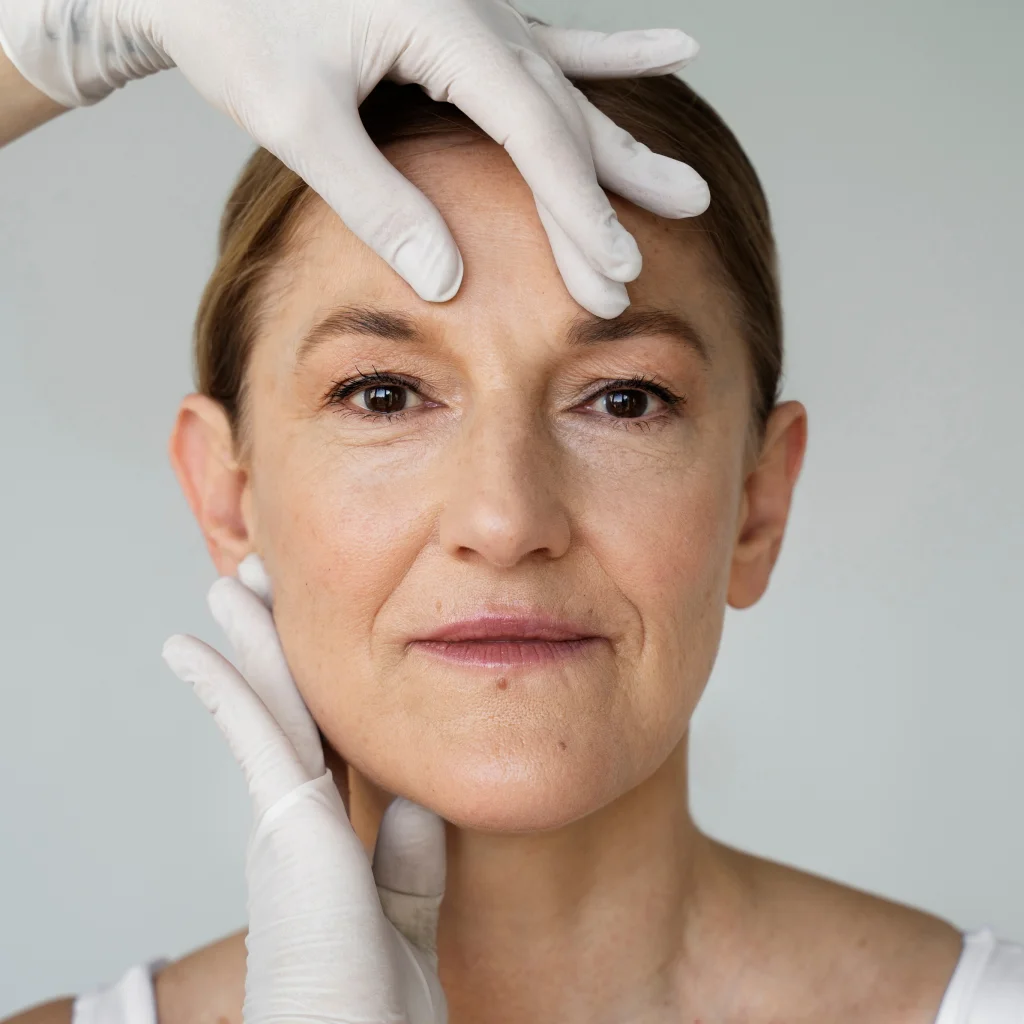
Medically reviewed by Dr. Usman Amiruddin Chin surgery in Dera Ghazi Khan is a facial plastic surgery procedure used to reshape, enlarge, reduce, or reposition the chin to create better facial balance. Depending on the patient's anatomy and goals, treatment may involve a chin implant, genioplasty, or chin reduction surgery. At UA Aesthetics, chin concerns …


Table of Contents
Medically reviewed by Dr. Usman Amiruddin
Chin surgery in Dera Ghazi Khan is a facial plastic surgery procedure used to reshape, enlarge, reduce, or reposition the chin to create better facial balance. Depending on the patient’s anatomy and goals, treatment may involve a chin implant, genioplasty, or chin reduction surgery. At UA Aesthetics, chin concerns are assessed as part of the overall facial profile rather than treating the chin as an isolated feature.
Key Takeaways
- Chin surgery is also called genioplasty or mentoplasty.
- It can improve a weak, recessed, prominent, long, short, or asymmetrical chin.
- Chin augmentation may use an implant or reposition the patient’s own chin bone.
- Sliding genioplasty moves the chin bone forward, backward, or sideways.
- Chin reduction reshapes or reduces excessive chin projection or size.
- The right procedure depends on facial proportions, bone structure, bite, health, and the patient’s goals.
- Recovery commonly involves swelling, bruising, temporary tightness or numbness, and dietary restrictions depending on the technique.
- Results vary from person to person, and no responsible surgeon can guarantee a particular cosmetic outcome.
- A detailed consultation is important before deciding whether chin surgery is appropriate.
What Is Chin Surgery?
Chin surgery is a surgical procedure that changes the size, shape, projection, or position of the chin to improve facial proportion and balance.
The medical terms genioplasty and mentoplasty are commonly used for surgical reshaping of the chin. Depending on the patient’s needs, surgery may increase chin projection, reduce an overly prominent chin, or reposition the chin bone.
The American Society of Plastic Surgeons describes chin surgery as a procedure that can reshape the chin through augmentation with an implant or through modification of the underlying bone.
For someone considering chin surgery in Dera Ghazi Khan, the most important point is that the goal should not simply be to make the chin “bigger.” The goal is usually to create a more harmonious relationship between the chin, jawline, lips, nose, cheeks, and overall facial profile.
Why Do People Consider Chin Surgery?
A chin can affect how balanced the entire face appears, particularly when viewed from the side.
Some people naturally have a recessed or underprojected chin. Others may have a chin that is too prominent, long, broad, short, or asymmetrical.
Common reasons for considering chin surgery include:
- Weak or recessed chin
- Small chin
- Lack of chin projection
- Prominent or overprojected chin
- Long chin
- Short chin
- Wide chin
- Crooked or asymmetrical chin
- Facial imbalance
- Changes following trauma
- Certain congenital chin deformities
- Desire for better lower-face proportions
Cleveland Clinic notes that genioplasty can be used to make the chin larger or more defined and can also reposition a recessed, protruding, or misaligned chin.
What Are the Main Types of Chin Surgery?
There is no single technique that is right for every patient. The procedure is selected according to the underlying anatomy and the desired change.
1. Chin Augmentation With an Implant
A chin implant can increase the projection and definition of an underdeveloped or recessed chin.
During chin implant surgery, a specially shaped implant is positioned over the chin bone. Depending on the surgical approach, the incision may be made inside the mouth or beneath the chin.
Chin augmentation may help create:
- Greater chin projection
- Improved side-profile balance
- Better lower-face definition
- Improved relationship between the chin and jawline
The American Society of Plastic Surgeons notes that chin augmentation is commonly used for an underprojected chin and may involve placement of an implant directly on the bone.
UA Aesthetics lists chin implants among its facial surgical procedures.
2. Sliding Genioplasty
Sliding genioplasty uses the patient’s own chin bone rather than an implant.
The surgeon makes a controlled cut in the chin portion of the lower jaw and repositions the bone. Depending on the patient’s anatomy, the chin may be moved forward, backward, upward, downward, or sideways.
The repositioned bone is then stabilized with surgical plates and screws.
This approach can be particularly useful when the desired correction involves the actual position of the chin bone rather than simply adding volume.
Cleveland Clinic explains that sliding genioplasty can reposition the chin forward, backward, or sideways to improve alignment and facial symmetry.
3. Chin Reduction Surgery
Some patients do not need additional chin projection. Instead, their chin may appear too long, wide, large, or prominent.
Chin reduction surgery reduces or reshapes the underlying bone to create a more proportionate appearance.
Cleveland Clinic describes chin reduction as a procedure that can decrease the length, width, or overall size of the chin.
The objective is not to make the chin as small as possible. It is to create a better relationship between the chin and the other facial features.

How Can Chin Surgery Improve Facial Balance?
The chin is closely connected visually to the nose, lips, jawline, and neck.
For example, a recessed chin may make the nose appear more prominent in profile, while excessive chin projection can make the lower face appear heavier.
The American Society of Plastic Surgeons notes that chin surgery may sometimes be considered alongside rhinoplasty because chin size can influence the perceived proportions of the nose and overall face.
This is why a proper facial assessment is more important than choosing a procedure based only on a photograph or a trend.
At UA Aesthetics, patients can also explore related facial contouring options such as [jawline refinement]Jawline Refinement at UA Aesthetics when lower-face contour is part of the concern.
Is Chin Surgery the Same as Jaw Surgery?
No. Chin surgery and jaw surgery are related but are not the same procedure.
Chin surgery primarily changes the shape or position of the chin.
Jaw surgery, also known as orthognathic surgery in appropriate cases, addresses the position and relationship of the jaws and may be recommended when significant bite or skeletal problems are present.
Some patients may have both chin and jaw concerns. A consultation can help determine whether the problem is primarily related to the chin, the jaw, the bite, or a combination of these factors.
The American Association of Oral and Maxillofacial Surgeons notes that genioplasty can sometimes form part of a broader corrective jaw-surgery plan.
Who Is a Good Candidate for Chin Surgery?
Chin surgery is highly individualized.
You may be considered a suitable candidate if:
- Your facial bones have reached skeletal maturity.
- You are generally healthy enough for surgery.
- You have a specific concern about the size, shape, or position of your chin.
- You have realistic expectations.
- You understand the potential benefits and risks.
- You are prepared to follow postoperative instructions.
- You are not undergoing surgery simply because of pressure from another person.
The American Society of Plastic Surgeons identifies physical health, stable weight, realistic expectations, nonsmoking, and concern about chin appearance among general considerations for candidacy.
However, only an individual medical assessment can determine whether surgery is appropriate for you.
What Happens During a Chin Surgery Consultation?
A consultation is one of the most important parts of the process.
Your surgeon may evaluate:
- Facial proportions
- Chin projection
- Jawline
- Facial symmetry
- Skin and soft-tissue characteristics
- Dental and bite relationships when relevant
- Previous surgery or trauma
- Medical history
- Medications and supplements
- Smoking or tobacco use
- Your aesthetic goals
Photographs may also be taken to help analyze facial proportions and plan treatment.
The American Society of Plastic Surgeons recommends discussing your goals, medical conditions, allergies, medications, previous surgeries, expected outcomes, and possible complications during the consultation.
A good consultation should also give you an opportunity to ask questions rather than simply being told which procedure to choose.
How Is Chin Surgery Performed?
The exact procedure depends on whether the treatment involves an implant, bone repositioning, or reduction.
Step 1: Facial Assessment and Surgical Planning
Your surgeon assesses your facial structure and determines the appropriate correction.
Step 2: Anesthesia
Depending on the procedure and individual circumstances, local anesthesia, sedation, or general anesthesia may be considered.
Step 3: Surgical Access
The incision depends on the technique. Some procedures use an incision inside the mouth, while others may use an incision beneath the chin.
Step 4: Chin Reshaping
For an implant, the implant is positioned over the chin bone.
For sliding genioplasty, the chin bone is carefully cut and repositioned.
For reduction surgery, excess bone may be removed or reshaped.
Step 5: Stabilization and Closure
When necessary, repositioned bone is secured using plates and screws. Incisions are then closed with appropriate sutures or other closure methods.
The specific surgical plan should always be individualized rather than based on a standard template.
How Should You Prepare for Chin Surgery?
Your surgeon may provide instructions before surgery based on your health and planned procedure.
Preparation can include:
- Medical evaluation
- Laboratory testing when appropriate
- Reviewing current medications
- Discussing allergies
- Stopping smoking
- Reviewing supplements
- Avoiding certain medicines that can increase bleeding when medically appropriate
- Arranging transportation and postoperative support
Do not stop prescribed medication on your own. Any medication changes should be made according to your surgeon’s or treating physician’s instructions.
ASPS notes that patients may be advised to avoid aspirin, certain anti-inflammatory medicines, and some herbal supplements because they can increase bleeding risk.
What Is Recovery Like After Chin Surgery?
Recovery depends on the technique, extent of surgery, individual healing, and whether another procedure was performed at the same time.
Common early effects may include:
- Swelling
- Bruising
- Mild to moderate discomfort
- Tightness
- Temporary numbness or altered sensation
- Difficulty chewing for a short period
- Temporary dietary restrictions
For procedures involving an incision inside the mouth, your surgeon may recommend liquid or soft foods and specific oral hygiene measures.
Cleveland Clinic notes that swelling and bruising can persist for several weeks and that patients may need soft foods for a period after genioplasty.
ASPS also emphasizes that healing continues for several weeks while swelling decreases and that patients should follow their surgeon’s individual recovery instructions.
When Can You Return to Work After Chin Surgery?
There is no single recovery timeline that applies to everyone.
Some patients may return to desk-based work within approximately a week after certain chin procedures, while more extensive surgery may require additional recovery time.
ASPS reports that patients undergoing chin augmentation may often return to work within about a week, although individual recovery varies.
Your surgeon should determine when it is appropriate to resume:
- Work
- Exercise
- Heavy lifting
- Sports
- Normal diet
- Other strenuous activities
Do not use another patient’s recovery timeline as your own medical instruction.
What Results Can You Expect From Chin Surgery?
The goal of chin surgery is generally to create a more balanced and proportionate appearance rather than an obviously “operated” look.
Depending on the procedure, results may include:
- Increased chin projection
- Reduced chin prominence
- Improved side profile
- Better lower-face proportions
- Improved facial symmetry
- Greater definition of the chin and jawline
However, swelling can temporarily hide the final appearance.
The American Society of Plastic Surgeons emphasizes that surgery is not an exact science and that a particular result cannot be guaranteed. In some situations, additional surgery may be required.
What Are the Risks of Chin Surgery?
Like all surgical procedures, chin surgery has potential risks.
Possible complications include:
- Infection
- Bleeding
- Bruising
- Anesthesia-related complications
- Poor wound healing
- Scarring
- Asymmetry
- Persistent pain
- Changes in skin sensation
- Numbness or tingling
- Implant movement or displacement
- Problems involving surgical hardware
- Prolonged swelling
- Unsatisfactory cosmetic results
- Need for revision surgery
For implant-based procedures, implant-specific complications can also occur.
ASPS lists risks including infection, bleeding, asymmetry, implant displacement, sensory changes, poor healing, prolonged swelling, and the possible need for revision surgery.
Cleveland Clinic similarly notes potential complications such as infection, bleeding, poor wound healing, implant or hardware problems, and prolonged numbness.
A responsible consultation should cover these risks before you make a decision.
Can Chin Surgery Be Combined With Other Facial Procedures?
Yes, chin surgery may sometimes be considered as part of a broader facial aesthetic plan.
Depending on the patient’s anatomy and goals, a surgeon may evaluate the relationship between the chin and:
- Rhinoplasty
- Nose reshaping
- Jawline refinement
- Neck contour
- Facial contouring
- Other facial procedures
This does not mean that combining procedures is automatically better. Each additional procedure has its own benefits, risks, recovery requirements, and suitability criteria.
The aim should always be appropriate facial balance and safe individualized treatment.
Is Chin Surgery Permanent?
The durability depends on the technique.
A solid chin implant is intended to provide long-term augmentation, while sliding genioplasty changes the position of the patient’s own bone.
However, long-term appearance can still be influenced by aging, weight changes, trauma, tissue changes, and other factors.
ASPS describes solid chin implant results as permanent, while also emphasizing that surgical outcomes cannot be guaranteed.
How Much Does Chin Surgery Cost in Dera Ghazi Khan?
The cost of chin surgery in Dera Ghazi Khan cannot be accurately quoted without assessing the patient and determining which procedure is required.
The final cost may depend on:
- Chin implant versus genioplasty
- Chin reduction versus augmentation
- Surgical complexity
- Type of anesthesia
- Facility or hospital charges
- Medical tests
- Surgeon and surgical team fees
- Follow-up requirements
- Whether another procedure is performed at the same time
For this reason, online “fixed price” estimates may not accurately represent your individual treatment.
The American Society of Plastic Surgeons also notes that chin surgery fees vary according to factors such as the procedure, surgeon experience, geographic location, anesthesia, facility, and related medical expenses.
A personalized consultation is the appropriate way to understand your treatment options and expected costs.
Why Consider UA Aesthetics for Chin Surgery in Dera Ghazi Khan?
UA Aesthetics provides facial, cosmetic, and plastic surgery services in Pakistan, with a clinic presence in Dera Ghazi Khan and Lahore. The official website lists Dr. Usman Amiruddin as Chairman of UA Aesthetics and describes his practice as covering aesthetic, cosmetic, and plastic surgery.
For patients considering chin surgery, the important advantage of a consultation is individualized facial assessment.
Instead of choosing a chin size from a photograph, the surgeon can evaluate how your chin relates to your:
- Nose
- Lips
- Jaw
- Cheeks
- Neck
- Facial proportions
- Side profile
Patients can also explore UA Aesthetics’ broader [plastic surgery services in Dera Ghazi Khan]Plastic Surgery at UA Aesthetics in Dera Ghazi Khan and related facial contouring options before deciding which treatment is appropriate.
Where Can You Get Chin Surgery in Dera Ghazi Khan?
UA Aesthetics has a Dera Ghazi Khan clinic listed at:
UA Aesthetics
Hospital Chowk, Lane 2, Opposite Trauma Center
Dera Ghazi Khan, Pakistan
The clinic’s official website lists Dera Ghazi Khan consultation hours as Monday–Wednesday, 4 PM–9 PM.
You can [contact UA Aesthetics to discuss a consultation]UA Aesthetics Contact & Appointments and discuss your chin concerns with the clinical team.
What Questions Should You Ask Before Chin Surgery?
Before committing to surgery, consider asking:
- Which chin procedure is appropriate for my facial structure?
- Do I need an implant or genioplasty?
- Would chin reduction be more appropriate?
- How will the procedure affect my side profile?
- Where will the incision be?
- What type of anesthesia will be used?
- What should I expect during recovery?
- When can I return to work?
- When can I exercise again?
- What complications should I know about?
- What happens if the result is not as expected?
- Are there nonsurgical alternatives that could address my concern?
ASPS recommends discussing surgical technique, candidacy, recovery, risks, facility, expected results, and alternatives during a chin-surgery consultation.
Frequently Asked Questions About Chin Surgery in Dera Ghazi Khan
Is chin surgery safe?
Chin surgery can be performed safely in appropriately selected patients, but it is still surgery and carries potential risks. Infection, bleeding, asymmetry, sensory changes, implant problems, poor healing, and revision surgery are among the possible complications.
What is chin augmentation?
Chin augmentation is a procedure designed to increase chin projection or definition. It may involve a chin implant or another surgical technique depending on the patient’s anatomy.
What is the difference between chin implant and genioplasty?
A chin implant adds volume or projection over the chin bone. Genioplasty changes the position or shape of the patient’s own chin bone. The appropriate option depends on the patient’s anatomy and desired correction.
Can chin surgery fix a recessed chin?
Yes. A recessed or underprojected chin may be treated with chin augmentation or, in appropriate cases, sliding genioplasty. The correct option depends on the underlying bone structure and facial proportions.
How long does chin surgery recovery take?
Recovery varies by procedure. Swelling and bruising are common during the early recovery period, and some patients require soft or liquid foods temporarily. Your surgeon will provide a personalized timeline for work, exercise, diet, and follow-up.
Does chin surgery improve the jawline?
Chin surgery can improve the appearance and balance of the lower face and may enhance the relationship between the chin and jawline. However, it does not automatically correct every type of jawline concern.
Can chin surgery be combined with rhinoplasty?
It can sometimes be considered as part of a broader facial-balancing plan. The chin and nose influence how facial proportions are perceived, so a surgeon may assess both when planning facial surgery.
Is chin surgery permanent?
The durability depends on the procedure. Chin implants are intended for long-term augmentation, while genioplasty changes the position of the chin bone. Aging and other changes can still affect facial appearance over time.
Is Chin Surgery Right for You?
If you feel that your chin is too small, recessed, prominent, long, short, or asymmetrical, chin surgery may be one possible solution.
But the most important question is not simply “Do I need chin surgery?”
It is:
“What is causing the imbalance, and which treatment can address it appropriately?”
A detailed examination can help distinguish between a chin-projection issue, jaw relationship, soft-tissue concern, or another facial-contour issue.
At UA Aesthetics, patients from Dera Ghazi Khan and surrounding areas can discuss their facial concerns and explore an individualized treatment plan with Dr. Usman Amiruddin.
Book a Chin Surgery Consultation in Dera Ghazi Khan
If you are considering chin surgery in Dera Ghazi Khan, the next step is a professional consultation rather than choosing a procedure based solely on online photographs or social-media trends.
Discuss your goals, facial proportions, medical history, expected recovery, risks, and treatment alternatives before making a decision.
📅 Book Your Consultation Today – Let’s Sculpt Your Future Together
💎 Transform Your Look. Boost Your Confidence. At UA Aesthetics, you’ll receive expert care, proven results, and a personalized journey to help you feel and look your best.
📍 Visit Us
Lahore Clinic
🏥 1001 E-1, Johar Town
🕓 Thu–Sunday
Dera Ghazi Khan Clinic
🏥 Hospital Chowk Lane 2, Opposite Trauma Center
🕓 Mon–Wed: 4 PM – 9 PM
📞 Contact & Appointments
📱 Call: 0322-4465542 | 0334-4541988
💬 WhatsApp: Message Us Directly
📢 Join Our WhatsApp Channel: Click Here to Join
📧 Email: usman_adin@hotmail.com
🌐 Learn More About Us
🌍 Website: uadaesthetics.com
📄 About Us: Learn about my qualifications, experience, and how we can help transform your look.
📲 Follow & Subscribe for Updates
📸 Instagram: @ua.aesthetics
▶️ YouTube: Subscribe Here
💡 Your Beauty, Refined. Your Confidence, Redefined.
✅ Secure your appointment today — your transformation begins with one click!
🏥 UA AESTHETICS | Official Just Click
🌐 Official Website
🔗 UA Aesthetics Official Website
⭐ Google Business Profiles
📍 UA Aesthetics Lahore Google Reviews
📍 UA Aesthetics Dera Ghazi Khan Google Reviews
⭐ UA Aesthetics Services & Products Reviews
📱 Official Social Media
💬 Dr. Usman Amirrudin WhatsApp
📢 UA Aesthetics WhatsApp Channel
🛍️ M. STORE BY UA AESTHETICS | Official Just Click
🌐 Official Website
⭐ Google Business Profile
📱 Official Social Media
📸 UA Aesthetics DG Khan Instagram
UA Aesthetics — Dera Ghazi Khan
Hospital Chowk, Lane 2, Opposite Trauma Center
For appointments and consultation information, [visit the official UA Aesthetics contact page]Book a Consultation at UA Aesthetics.
You can also explore the [official UA Aesthetics website]UA Aesthetics Official Website to learn more about facial aesthetics, plastic surgery, and related procedures.
Medical Disclaimer
This article is intended for general educational and informational purposes only. It does not replace an in-person medical consultation, diagnosis, or individualized treatment plan. Chin surgery is a surgical procedure with potential risks and complications. Suitability, technique, recovery, and expected results vary between patients. Always discuss your medical history, medications, expectations, alternatives, and risks with a qualified healthcare professional before deciding on treatment.
Sources: American Society of Plastic Surgeons, Cleveland Clinic, and American Association of Oral and Maxillofacial Surgeons.
✅ All UA Aesthetics Services
🔷 Surgical Procedures
🔷 Non-Surgical Procedures