Plastic surgery is becoming increasingly common in Pakistan. Many people consider plastic or cosmetic procedures to improve appearance, restore confidence, or correct medical conditions. However, one important question is often asked: Is plastic surgery safe in Pakistan? The answer is yes — when performed by a qualified plastic surgeon in a proper medical facility. Safety …


Plastic surgery is becoming increasingly common in Pakistan. Many people consider plastic or cosmetic procedures to improve appearance, restore confidence, or correct medical conditions. However, one important question is often asked:
Is plastic surgery safe in Pakistan?
The answer is yes — when performed by a qualified plastic surgeon in a proper medical facility. Safety depends on several critical factors, which every patient should understand before making a decision.
What Is Plastic Surgery?
Plastic surgery is a medical specialty that focuses on reconstructing, repairing, or enhancing parts of the body. It includes both reconstructive procedures (such as burn or trauma repair) and cosmetic procedures (such as rhinoplasty, liposuction, or tummy tuck).
Plastic surgery is not just about appearance — it is about medical safety, function, and long-term wellbeing.
Is Plastic Surgery Safe in Pakistan?
Plastic surgery can be safe in Pakistan if the following conditions are met:
• The procedure is performed by a qualified and trained plastic surgeon
• Surgery is done in a properly equipped clinic or hospital
• International medical safety protocols are followed
• The patient is properly evaluated before surgery
• Post-operative care and follow-up are provided
Problems usually arise when surgery is performed by unqualified individuals, in non-medical settings, or without proper patient assessment.
Importance of Choosing a Qualified Plastic Surgeon
The most important factor in plastic surgery safety is the surgeon’s qualification and experience.
A qualified plastic surgeon:
• Has formal training in plastic and reconstructive surgery
• Understands anatomy, complications, and risk management
• Performs proper patient screening
• Follows ethical medical practices
• Provides realistic expectations
Patients should always verify the surgeon’s credentials and experience before proceeding with any cosmetic or reconstructive procedure.
Clinic and Hospital Safety Standards
Even the best surgeon cannot ensure safety without a proper medical setup.
A safe plastic surgery clinic should have:
• Sterilized operation theatre
• Trained medical staff
• Emergency equipment
• Anesthesia safety protocols
• Clean and hygienic environment
Surgery performed in beauty salons, unregistered clinics, or informal setups can be extremely dangerous and should always be avoided.
Common Myths About Plastic Surgery in Pakistan
Myth 1: Plastic surgery is always risky
Fact: When performed by a qualified plastic surgeon in a proper facility, plastic surgery is generally safe.
Myth 2: Anyone offering cosmetic procedures is a plastic surgeon
Fact: Not all cosmetic practitioners are trained plastic surgeons. Always verify qualifications.
Myth 3: Plastic surgery gives instant perfect results
Fact: Healing takes time, and results improve gradually with proper recovery.
Patient Evaluation and Consultation
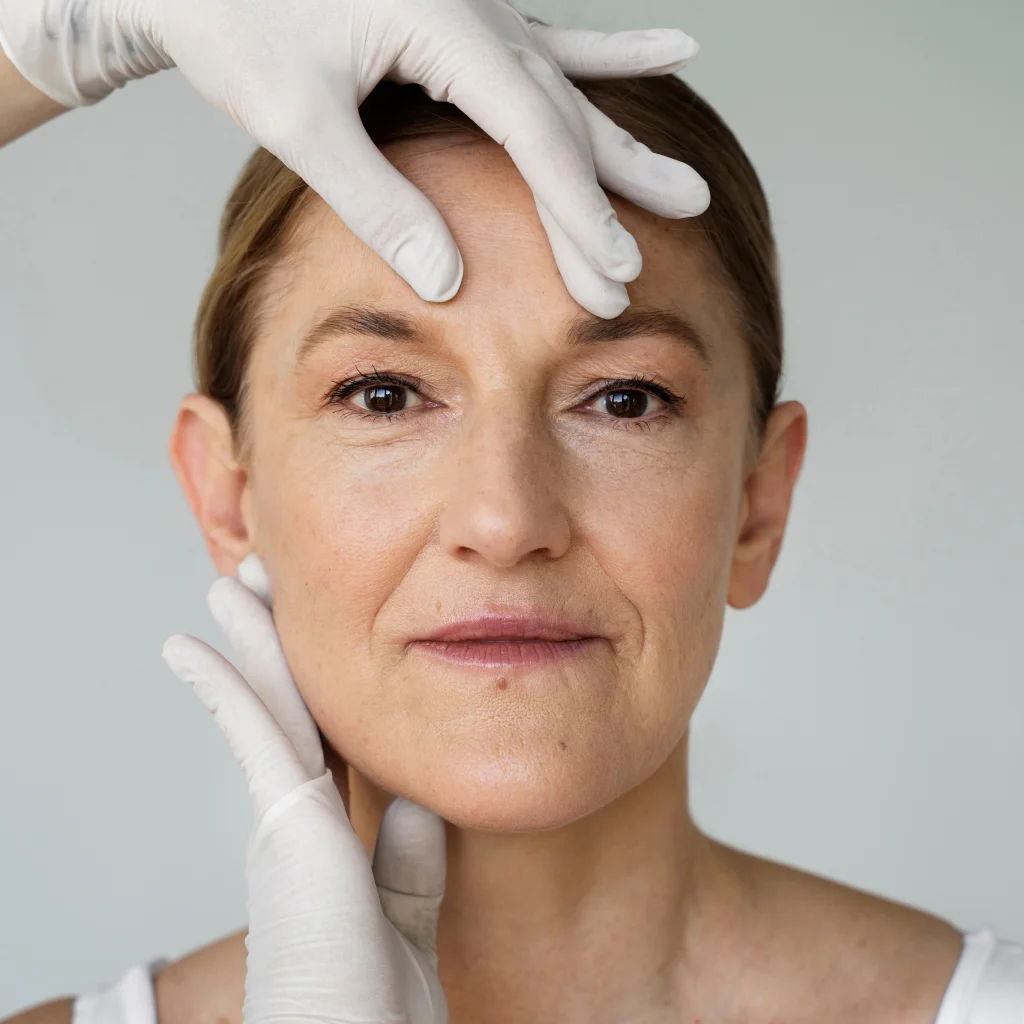
A safe plastic surgery journey always begins with a detailed consultation.
During consultation:
• Medical history is reviewed
• Physical examination is performed
• Procedure options are discussed
• Risks and benefits are explained
• Recovery timeline is clarified
No responsible plastic surgeon will rush a patient into surgery without proper evaluation.
Recovery and Aftercare
Post-surgery care is just as important as the surgery itself.
Safe recovery includes:
• Following medical instructions
• Attending follow-up visits
• Avoiding unnecessary physical stress
• Monitoring for any unusual symptoms
Proper aftercare significantly reduces complications and improves final outcomes.
Expert Opinion
Plastic surgery is a medical procedure, not a beauty shortcut. When approached responsibly, it can be safe and beneficial.
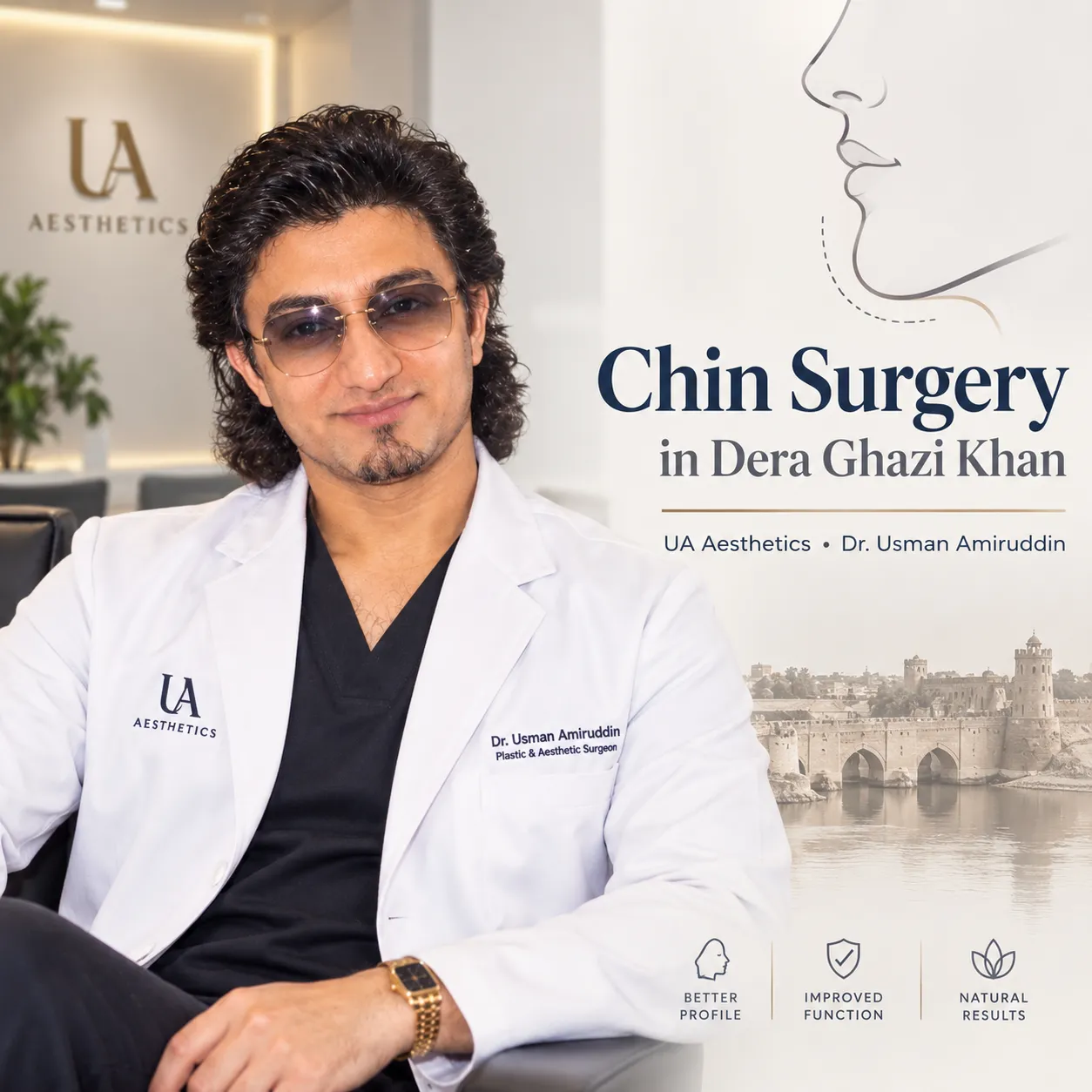
This article is written by Dr Usman Amiruddin, a qualified Plastic Surgeon practicing at UA Aesthetics, with clinics in Lahore and DG Khan. The focus of treatment is always patient safety, ethical practice, and natural results.
Final Thoughts
If you are considering plastic surgery in Pakistan, take time to:
• Research your surgeon
• Choose a certified medical facility
• Ask questions during consultation
• Understand risks and recovery
An informed patient makes safer decisions.
📅 Book Your Consultation Today – Let’s Sculpt Your Future Together
💎 Transform Your Look. Boost Your Confidence. At UA Aesthetics, you’ll receive expert care, proven results, and a personalized journey to help you feel and look your best.
📍 Visit Us
Lahore Clinic
🏥 1001 E-1, Johar Town
🕓 Thu–Sunday
Dera Ghazi Khan Clinic
🏥 Hospital Chowk Lane 2, Opposite Trauma Center
🕓 Mon–Wed: 4 PM – 9 PM
📞 Contact & Appointments
📱 Call: 0322-4465542 | 0334-4541988
💬 WhatsApp: Message Us Directly
📢 Join Our WhatsApp Channel: Click Here to Join
📧 Email: usman_adin@hotmail.com
🌐 Learn More About Us
🌍 Website: uadaesthetics.com
📄 About Us: Learn about my qualifications, experience, and how we can help transform your look.
📲 Follow & Subscribe for Updates
📸 Instagram: @ua.aesthetics
▶️ YouTube: Subscribe Here
💡 Your Beauty, Refined. Your Confidence, Redefined.
✅ Secure your appointment today — your transformation begins with one click!
Book a Consultation
It’s easy and free!